
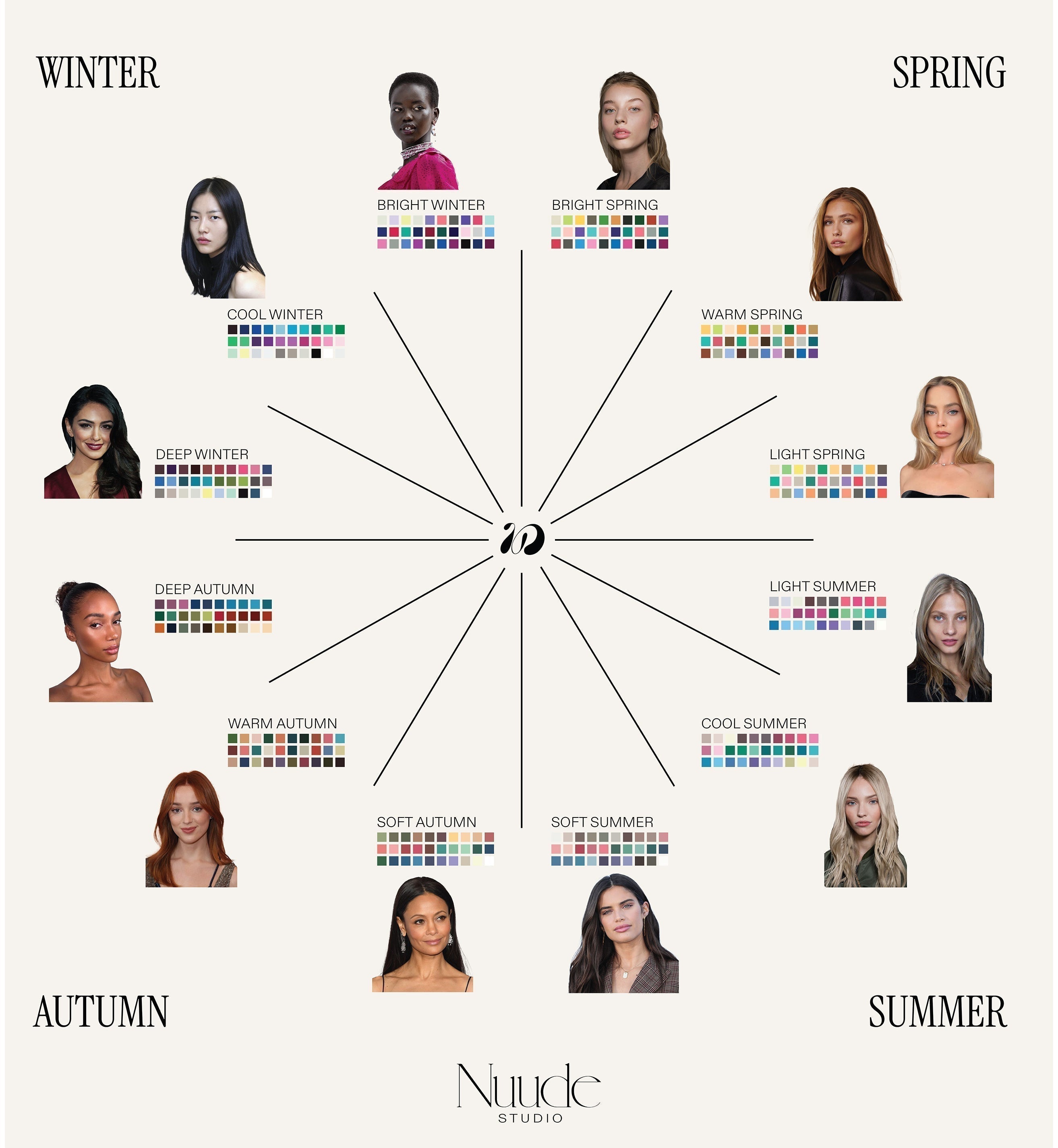

Understanding the Fundamentals of Seasonal Color Analysis
Color analysis has revolutionized the way we approach personal style, transforming the overwhelming task of choosing flattering colors into a systematic, science-based approach. At its core, seasonal color analysis is a method that identifies the most harmonious colors for your unique features by examining the natural undertones in your skin, hair, and eyes.
The concept emerged from the understanding that certain colors can either enhance your natural radiance or drain vitality from your appearance. When you wear colors that align with your seasonal palette, your skin appears clearer, your eyes more vibrant, and your overall appearance more polished and youthful.
The Science Behind Color Harmony
Seasonal color analysis operates on three fundamental principles that determine your ideal color palette:
Hue refers to the temperature of your coloring—whether your natural features lean warm (golden, peachy undertones), cool (pink, blue undertones), or neutral (a balanced mix). This is perhaps the most crucial factor, as wearing colors with the wrong temperature can make you appear washed out or sallow.
Value assesses the lightness or darkness of your natural coloring. Those with light value benefit from softer, lighter colors, while individuals with dark value can handle deeper, more intense shades. Medium value individuals fall somewhere between these extremes.
Chroma determines whether you look best in muted, soft colors or bright, clear ones. High chroma individuals can wear vivid, saturated colors, while low chroma types are flattered by dusty, toned-down shades.

The Four-Season System: Your Starting Point
The traditional four-season approach provides an accessible entry point into color analysis. Each season represents a distinct combination of the three principles:
Spring individuals typically have warm undertones with light to medium value and high chroma. They're flattered by clear, bright colors like coral, golden yellow, and warm greens.
Summer types possess cool undertones with light to medium value and low chroma. Their ideal palette includes soft, muted colors such as lavender, dusty blue, and rose.
Autumn personalities feature warm undertones with medium to dark value and low chroma. They shine in rich, earthy tones like burnt orange, deep gold, and olive green.
Winter individuals have cool undertones with medium to dark value and high chroma. They're stunning in bold, contrasting colors such as true red, royal blue, and pure white.
2024 Seasonal Color Analysis: Complete Guide to Four Season Palettes
| Season | Undertone & Characteristics | Best Colors | Colors to Avoid | Celebrity Examples |
|---|---|---|---|---|
| Spring | Warm undertones, light to medium value, high chroma. Golden or peachy skin with blonde to light brown hair | Coral, peach, golden yellow, turquoise, warm pink, ivory, light navy | Black, burgundy, deep purple, cool grays, dusty colors | Scarlett Johansson, Emma Stone, Blake Lively |
| Summer | Cool undertones, light to medium value, low to medium chroma. Pink or blue-based skin with ash blonde to brown hair | Soft pink, lavender, powder blue, sage green, rose brown, soft white, navy | Orange, bright yellow, warm browns, black, intense colors | Kate Middleton, Reese Witherspoon, Amy Adams |
| Autumn | Warm undertones, medium to dark value, low to medium chroma. Golden or bronze skin with red to dark brown hair | Rust, olive green, golden brown, burnt orange, deep teal, cream, chocolate | Pink, purple, cool blues, stark white, icy colors | Julia Roberts, Jessica Chastain, Julianne Moore |
| Winter | Cool undertones, light or dark value, high chroma. Pink or blue-based skin with dark brown to black hair | True red, royal blue, emerald green, hot pink, pure white, black, magenta | Orange, yellow-green, warm browns, muted colors, beige | Megan Markle, Anne Hathaway, Sandra Bullock |
Beyond the Basics: The 16-Season System
While the four-season system provides valuable guidance, many individuals find themselves between categories or notice that only certain colors within their assigned season truly flatter them. This is where the expanded 16-season system proves invaluable.
The 16-season approach recognizes that each traditional season contains four subcategories, creating more precise color recommendations. For example, within the Spring category, you might be a Light Spring (high value, warm, clear), Warm Spring (very warm, medium value, clear), Clear Spring (high chroma, warm, medium value), or True Spring (the classic spring archetype).
This nuanced approach acknowledges that color analysis isn't one-size-fits-all. Two people might both be Springs, but one thrives in the softest spring colors while another requires the brightest, most saturated options within the palette.
Discovering Your Seasonal Type
Determining your seasonal color palette requires careful observation of how different colors interact with your natural features. The most accurate method involves draping various colored fabrics near your face in natural lighting and observing the effects.
Content is being updated. Check back soon.
Professional color analysis provides the most precise results, but understanding the fundamental principles empowers you to make informed choices about your wardrobe. Pay attention to compliments you receive when wearing certain colors, notice which makeup shades make your eyes pop, and observe how different lighting affects your appearance in various colored clothing.
Remember that color analysis is about enhancing your natural beauty, not restricting your choices. While your seasonal palette provides a roadmap to your most flattering colors, personal preference and lifestyle considerations should also influence your wardrobe decisions.
As we delve deeper into this comprehensive guide, we'll explore how to integrate your seasonal color palette with your body type considerations, creating a wardrobe strategy that flatters both your coloring and your silhouette. The intersection of color analysis and body type awareness forms the foundation of truly personalized style.
Discovering Your Seasonal Color Type Through Self-Assessment
Determining your seasonal color type requires careful observation of your natural features and how different colors interact with your complexion. This systematic approach will help you identify whether you belong to the warm or cool family, and subsequently narrow down your specific seasonal category.
The Foundation: Warm vs Cool Undertones
Your undertone is the subtle hue beneath your skin's surface that remains constant regardless of sun exposure or makeup. Cool undertones lean toward pink, red, or blue bases, while warm undertones have yellow, golden, or peachy bases. Neutral undertones contain a balanced mix of both warm and cool elements.
To identify your undertone, examine the veins on your wrist in natural light. Blue or purple veins typically indicate cool undertones, while green veins suggest warm undertones. If you see both colors equally, you likely have neutral undertones. Additionally, consider which metals look most flattering against your skin - silver generally complements cool undertones, while gold enhances warm undertones.
The relationship between your natural coloring and seasonal categories extends beyond simple warm and cool classifications. Each season encompasses specific characteristics that create harmonious color combinations with your inherent features.
Spring: The Warm and Bright Palette
Spring individuals possess warm undertones with bright, clear coloring. Their best colors mirror the fresh vibrancy of springtime - think coral, warm pink, golden yellow, and bright turquoise. Spring types typically have light to medium skin with golden or peachy undertones, hair ranging from golden blonde to warm brown, and eyes in shades of blue, green, or warm brown with golden flecks.
Springs should avoid colors that are too muted, dark, or cool-toned, as these can make them appear washed out or tired. Instead, they thrive in colors with yellow undertones and high saturation levels.
Summer: The Cool and Soft Palette
Summer types have cool undertones with soft, muted coloring. Their ideal palette consists of colors with blue undertones and lower saturation - soft blues, lavender, rose pink, and sage green. Summer individuals often have light to medium skin with pink or blue undertones, hair in ash blonde to medium brown shades, and eyes in soft blue, green, or gray tones.
Summers should steer clear of warm, bright, or overly saturated colors, which can overwhelm their delicate coloring. Their beauty shines in gentle, sophisticated hues that echo a misty summer morning.
Autumn: The Warm and Muted Palette
Autumn types combine warm undertones with rich, earthy coloring. Their perfect colors reflect the depth of fall foliage - rust, olive green, golden brown, and deep orange. Autumn individuals typically have medium to deep skin with golden or bronze undertones, hair in rich browns, auburn, or deep red, and eyes in warm brown, amber, or deep green.
Autumns should avoid cool, bright, or icy colors that clash with their warm, grounded nature. Their strength lies in colors that have depth and warmth, creating a sophisticated and earthy aesthetic.
Winter: The Cool and Dramatic Palette
Winter types possess cool undertones with high contrast coloring. Their striking palette includes bold, saturated colors - true red, royal blue, emerald green, and pure white. Winter individuals often have light to deep skin with pink or blue undertones, hair ranging from dark brown to black (or platinum blonde), and eyes in deep blue, brown, or striking green.
Winters should avoid warm, muted, or dusty colors that diminish their natural drama. Their beauty is enhanced by colors with clarity and intensity that match their striking natural contrast.
Understanding these seasonal characteristics provides the foundation for building a wardrobe that naturally complements your features. However, the relationship between seasonal colors and body types adds another layer of sophistication to your personal style strategy, which we'll explore in the next section.
Customizing Your Seasonal Color Palette for Different Body Types
Once you've identified your seasonal color palette, the next crucial step is understanding how to adapt these colors to complement your specific body type. The intersection of color analysis and body type awareness creates a powerful styling strategy that enhances both your natural coloring and your silhouette.
Strategic Color Placement for Body Enhancement
Color placement plays a pivotal role in creating visual balance and highlighting your best features. Understanding where to position your seasonal colors can dramatically transform your overall appearance and create a more harmonious look.
For apple body types, focus on drawing attention upward by incorporating your brightest seasonal colors near the face through accessories, scarves, or statement jewelry. Keep darker, more muted colors from your palette around the midsection to create a streamlined silhouette. Pear-shaped individuals should reverse this strategy, using lighter colors from their seasonal palette on top and deeper, richer tones on the bottom to balance proportions.
Rectangle body types benefit from using contrasting colors within their seasonal palette to create curves and definition. Layer different values of your seasonal colors to add visual interest and dimension. Hourglass figures can confidently wear any color from their palette, but should pay attention to color blocking techniques that emphasize their natural waist.
Adapting Seasonal Colors for Professional and Casual Settings
Your seasonal color palette should work seamlessly across all aspects of your life. For professional environments, focus on the more sophisticated and subdued colors within your palette. Winter types might gravitate toward deep navy, charcoal, or burgundy for business settings, while Spring types could opt for warm camel, soft coral, or sage green.
Casual styling allows for more creative expression within your seasonal framework. Summer types can embrace their soft pastels and muted tones in relaxed silhouettes, while Autumn types might incorporate their rich earth tones through textured fabrics and layered pieces.
Building a Cohesive Wardrobe with Your Seasonal Colors
Creating a wardrobe that honors both your seasonal colors and body type requires strategic planning. Start with neutral foundation pieces in your best colors, then add accent pieces that showcase the full range of your palette. This approach ensures versatility while maintaining color harmony.
Consider the 80/20 rule when building your wardrobe: 80% of your pieces should come from your core seasonal colors, while 20% can include carefully chosen accent colors that still complement your overall palette. This balance prevents monotony while ensuring every piece works together cohesively.
Investment pieces like coats, blazers, and quality basics should always align with your seasonal color palette and be cut to flatter your body type. These items form the backbone of your wardrobe and will be worn frequently, making their color and fit crucial to your overall styling success.
Seasonal Color Maintenance and Evolution
Your relationship with color will evolve over time, influenced by factors such as age, lifestyle changes, and personal growth. While your core seasonal type typically remains consistent, you may find yourself gravitating toward different aspects of your palette as you mature.
Regular wardrobe audits help ensure your clothing continues to serve you well. Assess which colors make you feel most confident and energized, and don't hesitate to adjust your approach while staying within your seasonal framework.
Remember that color analysis is a tool for enhancement, not restriction. The goal is to feel confident and authentic in your choices while looking your absolute best. By combining your seasonal color knowledge with body type awareness, you create a powerful foundation for a wardrobe that truly works for your unique combination of features and lifestyle needs.
Embrace the journey of discovering your perfect color and style combination. With patience and practice, you'll develop an intuitive understanding of what works best for you, making daily styling decisions effortless and enjoyable.
No comments yet. Be the first to share your thoughts!