

Moving past seasonal palettes
The old four-season system—Winter, Spring, Summer, and Autumn—is too rigid. It misses the nuance of how skin actually looks. Your skin tone changes with age and lifestyle, so a fixed category rarely works for a lifetime.
Traditional seasonal analysis frequently overlooks deeper skin tones, assumes a one-size-fits-all approach to aging, and often doesn’t consider how body shape impacts how color is perceived. We’re moving past those limitations. This guide is about empowerment, not prescription. It’s about discovering the colors that genuinely make you feel confident and radiant.
The goal isn’t to force yourself into a pre-defined box. Instead, it’s to understand the underlying principles of color harmony and then apply them to your unique features. We’ll focus on undertones, chroma, and how these elements interact with your individual coloring and shape. This isn’t just a style guide; it’s a tool for self-discovery.
Find your undertone
Understanding your undertone is the single most important step in finding your perfect colors. It’s the subtle hue beneath the surface of your skin, and it dictates which colors will harmonize with your complexion. The main undertones are warm, cool, neutral, and olive, and determining yours accurately is key. So many people misidentify this!
The vein test – checking the color of your veins – is often cited, but it’s notoriously unreliable. Veins can appear different colors depending on your skin depth and the lighting. A more effective method is to examine how your skin reacts to different metals. Does gold jewelry make your skin glow, or does silver look better? Gold generally flatters warm undertones, while silver complements cool ones. Look at yourself in natural light, and compare the effect.
Skin depth matters, but it isn't a rule. I've seen fair skin with deep warmth and deep skin with cool, blue undertones. If you use an online AI tool for a baseline, always verify the result by holding gold and silver jewelry against your face in midday sun.
Don't fall for the trap of thinking you can only have one undertone. Many people have neutral undertones, meaning they can pull off a wider range of colors. Olive undertones, characterized by a greenish hue, are common in those with medium to deep skin tones. It’s a nuanced process, and it takes practice.
Discover Your Undertone: A Quick Guide
Finding your perfect color palette starts with understanding your skin's undertone. This isn’t about how light or dark your skin is, but the subtle hue *beneath* the surface. This quiz will help you get a preliminary idea of whether you lean cool, warm, neutral, or olive. Remember, this is a starting point – professional analysis provides the most accurate results!
Color Families: Beyond 'Winter' and 'Summer'
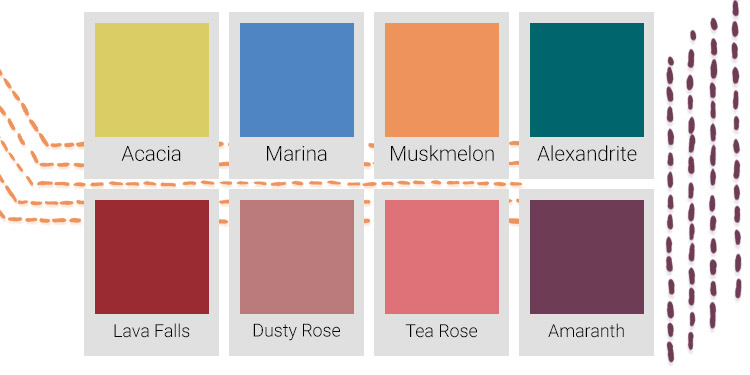
The 2026 guide moves beyond the four seasons to offer a more nuanced palette of color families. Instead of simply being a 'Winter' or a 'Summer', you might fall into a family like 'Golden Peach,' 'Dusty Rose,' or 'Deep Jade.' These families are categorized by both undertone and chroma – the intensity of the color.
For example, the 'Golden Peach' family is best for those with warm undertones and medium skin depth. It features colors like apricot, coral, warm beige, and olive green. 'Dusty Rose' is suited for cool undertones and fair to light skin, with shades like mauve, rose pink, lavender-grey, and soft blues. 'Deep Jade' is for warm undertones and deeper skin tones, including emerald green, teal, bronze, and chocolate brown.
We’ve expanded the spectrum to include families like 'Smoky Plum' (cool, muted, for fair skin), 'Terracotta Sun' (warm, vibrant, for medium skin), 'Arctic Sky' (cool, light, for fair skin), and 'Espresso Bean' (warm, deep, for deep skin). The goal is to find a family that resonates with your coloring and personal preference. I really believe naming them this way makes it easier to visualize.
Each family has a range of colors, from light to dark, allowing for versatility within your wardrobe. The key is to understand the relationship between the colors and your skin tone. Colors within your family will create harmony and make your complexion appear radiant. A helpful resource is Color Posh's seasonal wardrobes, which are now organized by these expanded color families.
- Golden peach: Best for warm undertones using apricot, coral, and olive green.
- Dusty rose: Best for cool undertones using mauve, rose pink, and lavender-grey.
- Deep Jade: Warm, emerald green, teal, bronze, chocolate brown
2026 Inclusive Color Guide: Color Family Manifestations by Undertone & Chroma
| Color Family | Undertone | Chroma | Description |
|---|---|---|---|
| Golden Peach | Warm | Soft | Appears as a muted, creamy peach with a noticeable golden undertone. Flattering on warmer skin tones, creating a healthy glow. |
| Golden Peach | Cool | Bright | Shifts towards a more vibrant, coral-peach. Can work on cooler undertones if balanced with neutral accessories, but requires careful consideration. |
| Dusty Rose | Neutral | Soft | A gentle, muted rose that complements a wide range of skin tones due to its neutrality. Creates a sophisticated, understated look. |
| Dusty Rose | Cool | Deep | Takes on a more mauve-rose appearance, offering richness and depth. Best suited for those who can handle deeper, cooler shades near the face. |
| Deep Jade | Olive | Deep | A rich, forest green with a subtle olive cast. Enhances olive undertones, creating a harmonious and natural look. |
| Deep Jade | Warm | Bright | Becomes a more vibrant, jewel-toned jade. Can add a pop of color to warmer complexions, but may overwhelm lighter skin tones. |
| Terracotta | Warm | Deep | A rich, earthy tone that complements warm undertones beautifully. Creates a grounded, natural aesthetic. |
| Terracotta | Neutral | Soft | Muted and versatile, presenting as a soft clay color. Works well as a base neutral for many skin tones. |
Illustrative comparison based on the article research brief. Verify current pricing, limits, and product details in the official docs before relying on it.
How color interacts with body shape
Color isn’t just about your skin tone; it’s also about how it interacts with your body shape. The right colors and color combinations can create visual balance and enhance your silhouette. It’s not about hiding or changing your body; it’s about working with it.
For example, if you have a Rectangle body type (straight up and down), color blocking can be a powerful tool to create the illusion of curves. Using two contrasting colors – a darker shade on the bottom and a lighter shade on top – can add dimension. Similarly, vertical stripes can elongate the body. Pear shapes can benefit from brighter colors on top to draw attention upwards.
Apple shapes can use color to define the waist. A-line dresses in a solid color or with a subtle pattern can create a flattering silhouette. Hourglass figures can experiment with a wider range of colors and patterns, as their balanced proportions allow for more versatility. Inverted Triangle shapes can balance broader shoulders with darker colors on top and lighter colors on the bottom.
Remember, these are guidelines, not rules. The most important thing is to feel comfortable and confident in what you’re wearing. Color Posh’s body type guides offer detailed advice on how to dress for your shape, incorporating color as a key element.
Age & Color: Evolving with You
As we age, our skin tone and hair color change, and our personal style evolves. The colors that looked stunning in your 20s might not be as flattering in your 40s or 60s. This isn't about 'giving up' on certain colors; it’s about adapting your palette.
Skin tends to lose luminosity with age, so brighter, more saturated colors can help counteract this. However, overly harsh or neon colors can accentuate wrinkles and imperfections. Softer, more muted tones often look more flattering. Silver and grey hair can also influence your color choices; embracing cool-toned colors can complement these shades beautifully.
It's about refinement, not replacement. You don’t need to overhaul your entire wardrobe. Simply tweak your existing palette by adding a few new pieces in colors that are more harmonious with your current coloring. A professional color analysis can be particularly helpful during these transitions.
Ultimately, the most important thing is to wear colors that make you feel good. Confidence is the most beautiful color of all.
Skin Tone Variations: Beyond the Surface
Skin tone isn’t uniform. Even within a single skin depth, there can be significant variations. Melanin isn't evenly distributed, leading to areas of pigmentation. The presence of redness, sallowness, or even subtle undertones can impact how colors appear on your skin.
For example, someone with fair skin and redness might find that certain shades of pink or red wash them out. Instead, they might opt for cooler, more muted tones like mauve or rose. Someone with sallowness might benefit from colors that add warmth and luminosity, like peach or coral.
Texture also plays a role. Smooth, even skin can handle a wider range of colors, while textured skin might benefit from softer, more diffused shades. Pay attention to how colors interact with your skin in different lighting conditions. What looks good indoors might not translate well outdoors.
This is where the 'inclusive' aspect of the 2026 guide truly shines. We acknowledge that everyone is unique, and there’s no one-size-fits-all solution. It's about understanding your individual variations and adjusting your color palette accordingly. Coloranalysis.com provides resources for finding a qualified analyst who can offer personalized guidance.
Putting It All Together: Your Personalized Palette
Now that you’ve explored undertones, color families, body type considerations, and age-related adjustments, it’s time to create your own personalized color palette. Start by identifying your dominant undertone and skin depth. Then, explore the color families that align with your coloring.
Experiment with different colors and shades. Try on clothes in various hues and see how they make you feel. Pay attention to how colors affect your complexion – do they brighten your skin, or do they make you look washed out? Don't be afraid to try unexpected combinations. Trust your instincts.
Gather color swatches and create a cohesive wardrobe. Color Posh’s home color guides can be a valuable resource for finding complementary colors. Consider building a capsule wardrobe around your core palette, adding seasonal pieces to expand your options.
Remember, these are guidelines, not rules. The most important thing is to feel confident and comfortable in what you’re wearing. Your color palette should reflect your personality and style. Don’t be afraid to break the rules and experiment until you find what works best for you. This is a journey of self-discovery, so enjoy the process!


No comments yet. Be the first to share your thoughts!